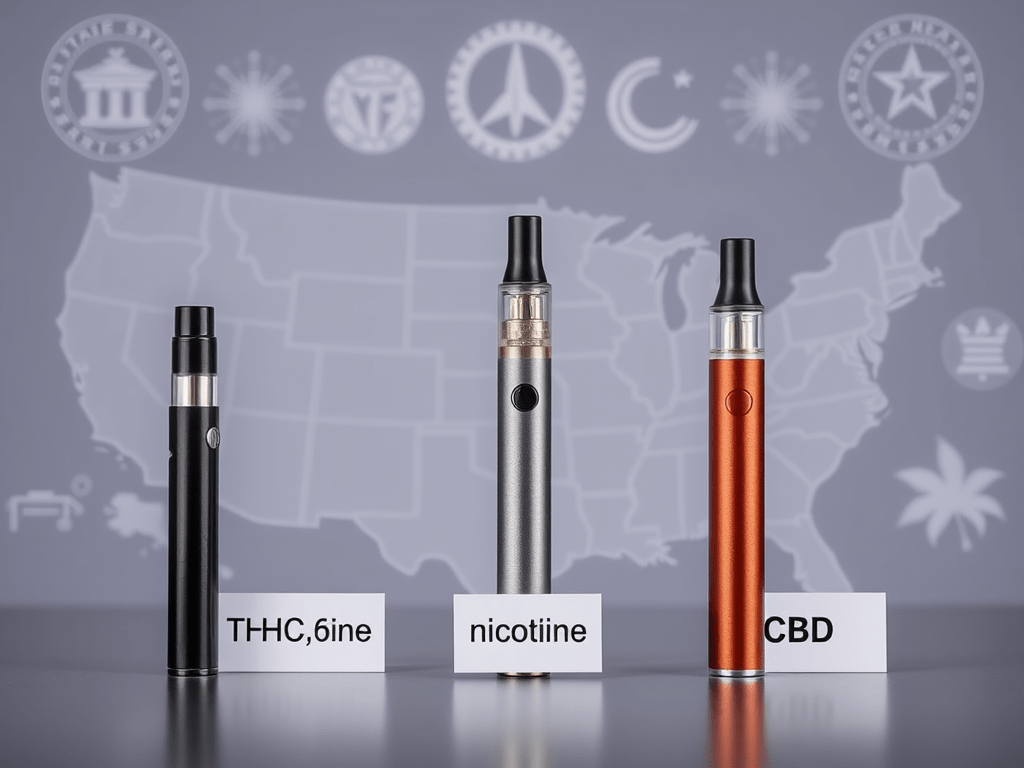
The legal landscape surrounding THC, nicotine, and CBD vapes is complex and often confusing. Each substance is regulated under different frameworks, which means that what is legal in one state may be prohibited in another. These differences affect how products are manufactured, sold, and consumed. Understanding the contrasts between federal and state rules, as well as the implications for labeling, shipping, and enforcement, is essential for both consumers and businesses. For example, the FDA regulates nicotine products, while THC falls under stricter federal prohibition even when state laws allow cannabis sales. This creates a complicated patchwork of rules that impact users nationwide.
Federal Laws vs. State Variations
The foundation of legality for THC, nicotine, and CBD lies in how federal law treats each substance compared to individual states. While federal laws provide a nationwide framework, states often enact their own policies, creating wide-ranging differences in what is legal and what is not.
THC under Federal Law
Tetrahydrocannabinol (THC), the psychoactive compound in cannabis, remains a Schedule I controlled substance under the Controlled Substances Act. This classification places it in the same category as substances like heroin, which means it is considered to have no accepted medical use and a high potential for abuse. Despite this, many states have legalized cannabis for medical or recreational use.
Nicotine under Federal Law
Nicotine, when used in tobacco-derived products, is regulated by the FDA through the Center for Tobacco Products. The 2009 Family Smoking Prevention and Tobacco Control Act gave the FDA authority over tobacco products, including e-cigarettes and vape pens containing nicotine. Manufacturers must comply with strict premarket authorization and marketing requirements.
CBD under Federal Law
Cannabidiol (CBD), derived from hemp, was legalized at the federal level with the 2018 Farm Bill, provided it contains less than 0.3 percent THC. While CBD is not a controlled substance, the FDA does not allow it to be marketed as a dietary supplement or food additive without approval.
State Differences
- THC: Some states fully allow recreational and medical cannabis, others only permit medical use, and a few maintain full prohibition.
- Nicotine: State-level rules primarily affect age restrictions, taxes, and where vaping products can be sold.
- CBD: Some states allow CBD freely, while others limit it in foods, beverages, or wellness products despite federal legality.
This patchwork creates challenges for anyone trying to navigate multiple jurisdictions, especially businesses operating across state lines.
Labeling and Lab Testing Requirements
Proper labeling and lab testing are critical to ensuring consumer safety and legal compliance. These requirements differ widely depending on whether the product contains THC, nicotine, or CBD.
THC Products
States that allow THC products typically mandate third-party lab testing for potency and contaminants such as pesticides, heavy metals, and mold. Packaging must include THC content, health warnings, and child-resistant seals. Some states also require QR codes linking to lab results.
Nicotine Products
Nicotine-containing products regulated by the FDA must have clear labeling that includes nicotine content, warnings about addiction, and ingredient lists. Flavored nicotine products often face additional scrutiny, with certain flavors banned in some jurisdictions.
CBD Products
CBD labeling is one of the most inconsistent areas. While the Farm Bill legalized hemp-derived CBD, states differ on whether products must be tested and how they must be labeled. Many require disclosure of cannabinoid content and batch numbers, though enforcement can vary.
Key Considerations for Consumers
- Always check for lab test reports before purchasing.
- Look for child-resistant and tamper-evident packaging.
- Verify THC levels in CBD products to ensure compliance with federal limits.
By understanding these requirements, buyers can better protect themselves and sellers can avoid costly legal issues.
Shipping Restrictions and Enforcement
How these products move across state lines is another area where laws diverge. Shipping restrictions depend heavily on the substance being sold.
Shipping THC Products
Because THC remains federally illegal, shipping it across state lines is a federal crime, even if both states have legalized cannabis. Distribution typically occurs within state boundaries through licensed dispensaries.
Shipping Nicotine Products
Nicotine vaping products are subject to the Prevent All Cigarette Trafficking (PACT) Act. This law requires sellers to register with the Bureau of Alcohol, Tobacco, Firearms and Explosives (ATF), verify customer age, pay state taxes, and use specific carriers that comply with federal reporting requirements. As a result, many major carriers such as UPS and FedEx no longer ship nicotine vaping products.
Shipping CBD Products
Hemp-derived CBD with less than 0.3 percent THC can legally be shipped across state lines. However, certain states may seize shipments or restrict the sale of CBD-infused food and beverages. Sellers must ensure compliance with both origin and destination state laws.
Enforcement in Practice
- Federal authorities prioritize large-scale illegal trafficking rather than individual consumers.
- States may impose fines or confiscate shipments that fail to comply with local regulations.
- Businesses face the greatest risk if they fail to follow PACT Act registration or testing requirements.
This enforcement framework makes shipping one of the most significant hurdles for sellers, while buyers must be cautious when ordering across borders.
Implications for Buyers and Sellers
The differences in legality affect both everyday consumers and businesses. Buyers need to know what they are purchasing, while sellers must operate within strict regulatory frameworks to avoid penalties.
For Buyers
- Know Your State Laws: Always confirm whether THC, nicotine, or CBD products are legal in your state.
- Check Labels and Certificates: Look for verified lab reports and accurate labeling before purchasing.
- Understand Restrictions: Shipping laws may affect whether you can order a product online or must buy locally.
A casual consumer might not think about these details when including wellness products, supplements, or even a Geek Bar Pulse in their travel or festival gear. However, legality and safety should always come first.
For Sellers
- Compliance Costs: Businesses must invest in lab testing, secure packaging, and regulatory filings.
- Market Opportunities: State legalization of THC and federal acceptance of CBD create expanding markets.
- Risks of Noncompliance: Violating PACT Act rules or mislabeling products can result in fines and shutdowns.
Simplified Breakdown Chart
| Substance | Federal Status | Shipping Rules | Key Requirements |
|---|---|---|---|
| THC | Federally illegal (Schedule I) | Cannot cross state lines | State-level testing and labeling |
| Nicotine | Legal, FDA regulated | Restricted under PACT Act | Clear warnings, age verification |
| CBD | Legal if under 0.3% THC | Generally legal, some state bans | Varies by state, labeling required |
Conclusion
The legal differences between THC, nicotine, and CBD vapes highlight the complexity of substance regulation in the United States. Federal laws create broad rules, but state-level variations make the situation much more nuanced. From labeling and lab testing to shipping restrictions, compliance is a moving target for both buyers and sellers. For consumers, the key takeaway is to stay informed and cautious. For businesses, compliance is not optional but essential for survival.
As legal landscapes evolve, it is important to stay up to date through credible resources like NORML’s cannabis law database. This ensures that decisions about purchasing, selling, or even casually carrying these products are informed and responsible.




 Vape Chronicle
Leave a comment