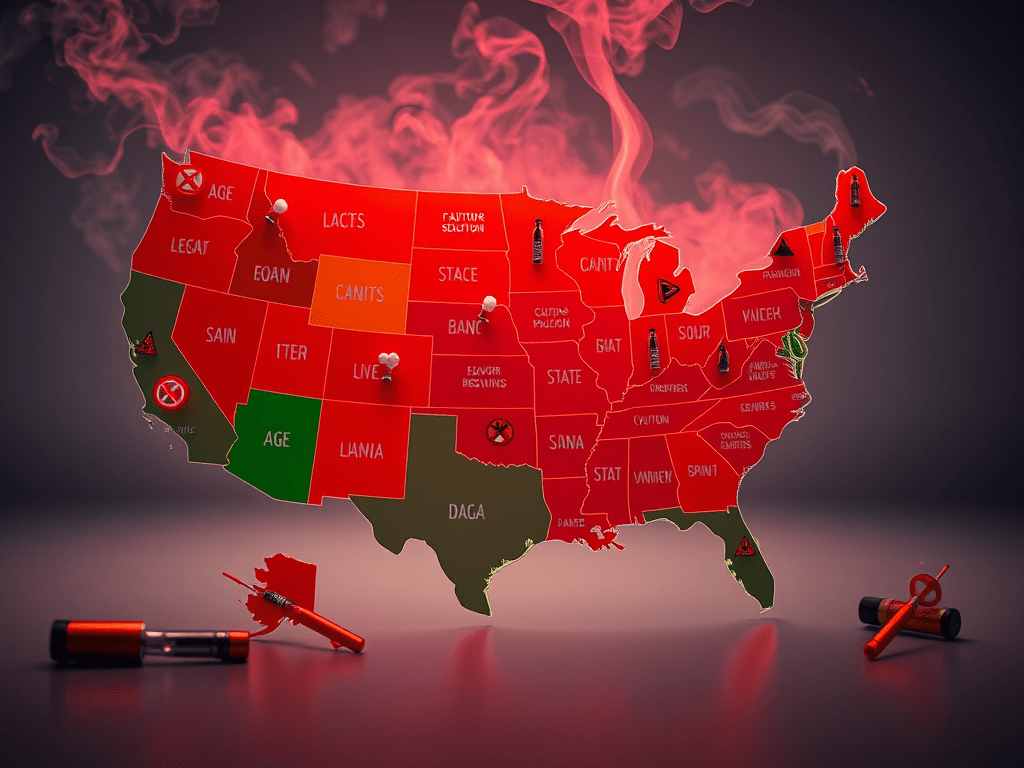
In 2025, vaping laws across the United States continue to evolve as states grapple with balancing public health concerns, harm reduction efforts, and personal freedoms. From new age restrictions to shipping bans, the patchwork of laws is becoming more complex for both users and retailers. Whether you’re a casual vaper or someone who runs a vape shop, understanding these legal changes is critical. According to CDC data on youth tobacco use, regulatory focus has intensified in states with higher youth vaping rates, driving shifts in policy at the state level.
States Increasing Age Limits or Flavor Bans
Some states are tightening their regulations in response to health concerns and lobbying from anti-tobacco groups. The primary focus in these states is on restricting access to flavored products and increasing the minimum purchase age beyond the federal standard of 21.
Age Limit Adjustments
While the federal minimum age for tobacco and vape purchases is set at 21, a few states are discussing or enacting additional restrictions:
- California: There are ongoing proposals in 2025 to limit flavored vape sales to consumers aged 25 and older. This would make California the strictest in the nation in terms of age access.
- Massachusetts: Already a leader in flavor bans, the state is now proposing further ID verification steps, especially for in-person purchases at smaller retailers.
- Illinois: Some local municipalities within Illinois have raised the legal purchase age to 23 in specific areas, creating confusion among users and store owners.
Expanding Flavor Bans
Flavor bans are at the forefront of legislative efforts. Lawmakers argue these flavors attract younger users, even though adult vapers often prefer them for harm reduction purposes.
- New York: Already banning flavored vape products, New York is expanding enforcement with undercover compliance checks.
- Rhode Island: The state recently passed a bill restricting all non-tobacco-flavored e-liquids, including menthol.
- Washington: A new bill proposes banning all synthetic nicotine products, a move that could restrict flavor options even further.
States Supporting Harm Reduction
While some states have taken a stricter stance, others are focusing on education and harm reduction. These states are looking at the broader picture and are more inclined to treat vaping as a tool to help adult smokers quit traditional cigarettes.
Harm Reduction-Friendly States
- Utah: Surprising many, Utah launched a state-funded harm reduction campaign highlighting the reduced risks of vaping compared to smoking. This includes public health messaging targeted at adult smokers.
- Georgia: Lawmakers are advocating for vape access in controlled environments such as adult-only stores to help adults transition from combustible cigarettes.
- Florida: Despite regulatory pressure, Florida remains a stronghold for vape-friendly legislation. The state’s leadership has resisted bans and instead focused on age enforcement and education.
This contrast highlights how vaping is still a political and public health battleground. While some regions focus on prohibition, others lean into controlled access and science-based approaches.
Online Sales Laws & Shipping Restrictions
As brick-and-mortar laws evolve, online sales and delivery rules have followed. The Preventing Online Sales of E-Cigarettes to Children Act, passed at the federal level, has led to a cascade of state-specific enforcement policies. By 2025, this area has only grown more complex.
Common Online Sales Restrictions
- Signature Requirement: Nearly every state now mandates an adult signature upon delivery for online vape orders. This applies even to accessories and non-nicotine items in some areas.
- State Licensing: Retailers must now apply for a vape-specific e-commerce license in states such as Michigan and Oregon, adding another layer of regulation.
- Restricted Shipping Zones: Carriers like USPS and FedEx already restrict shipping vape products. Some states have gone further by blacklisting zip codes near schools, tribal lands, or government buildings.
State-Specific Rules
- California: Requires an extensive verification process for age and address before an online order is processed.
- Texas: Permits online sales but imposes strict fines for failing to properly label nicotine shipments.
- New Jersey: Recently added a state vape excise tax for all online orders, regardless of whether the business is based in New Jersey.
For users and sellers alike, it’s essential to understand these changes. Retailers, especially, must keep up with fulfillment compliance to avoid penalties or shutdowns.
How These Changes Impact Retailers & Users
As vaping laws continue to change, the effects ripple through every level of the industry. Retailers are being forced to adapt quickly, while users face increased limitations on product availability and purchase options.
Retail Challenges
- Compliance Costs: Vape shops now invest heavily in compliance systems, age-verification technology, and staff training. Some have had to hire legal consultants to remain in business.
- Product Availability: With flavor bans and synthetic nicotine crackdowns, many retailers must drastically limit their stock or source from alternative brands.
- Marketing Restrictions: Even in states with favorable laws, marketing vape products has become difficult. Social media restrictions, geotargeting bans, and increased scrutiny limit outreach.
Consumer Frustrations
- Limited Access: Adult users, especially those in rural areas, often struggle to access their preferred products due to online shipping blocks.
- Confusion Over Laws: Many users are unclear about what’s legal in their area. This confusion is even more pronounced for those who travel frequently or split time between two states.
- Risk of Illegal Purchases: The difficulty in buying products legally has led some users to turn to unregulated or black-market sellers, which poses significant health risks.
For example, some users traveling for music festivals or extended road trips have turned to packing lightweight options like Rama Vape, a convenient and discreet disposable device that avoids the need to carry large kits or liquids. The portability of modern devices helps consumers stay within legal lines, especially when crossing into stricter jurisdictions.
Tips for Staying Informed and Compliant
Navigating the ever-changing world of vape laws in 2025 can be overwhelming. Whether you are a user or a retailer, there are steps you can take to stay informed and ensure compliance.
Actionable Steps for Vape Users
- Check State-Specific Regulations: Use official state websites or trusted news sources to stay current. For example, Public Health Law Center offers updates on state-specific tobacco control laws.
- Sign Up for Alerts: Many advocacy groups and vape retailers offer newsletters that include regulatory updates.
- Know Your Rights: Understand what you’re legally allowed to buy, where you can use it, and how to transport products across state lines.
Tips for Vape Retailers
- Train Staff Regularly: Make sure all employees are aware of the latest rules and how to apply them in real-world sales situations.
- Update Your Website: Online vape shops must post up-to-date compliance disclaimers and product restrictions based on shipping destinations.
- Join Industry Groups: Collaborating with trade associations can give small retailers access to legal updates, best practices, and support during legal challenges.
Recommended Tools
- Vape Law Trackers: Some platforms now offer interactive vape law maps that update in real-time.
- Legal Consultation Services: Especially important for e-commerce brands that operate across multiple states.
- Advocacy Networks: Groups like CASAA and the VTA provide regular updates and action alerts when new bills are introduced.
Conclusion
As 2025 progresses, it is clear that vaping legislation in the United States is becoming more nuanced and complex. From progressive harm reduction strategies in some states to increasingly restrictive measures in others, the legal landscape continues to shift. While these laws aim to protect public health, they also create challenges for adult consumers and legitimate businesses trying to operate responsibly.
Understanding the legal environment is no longer optional. Whether you are a retailer shipping nationwide or a consumer simply trying to make informed choices, staying educated is crucial. Tools like vape law maps and Public Health Watch reports can make a difference in helping everyone stay compliant and safe in a changing market.
As regulations grow stricter and more sophisticated, awareness and advocacy will become essential parts of the vaping journey.





 Vape Chronicle
Leave a comment